
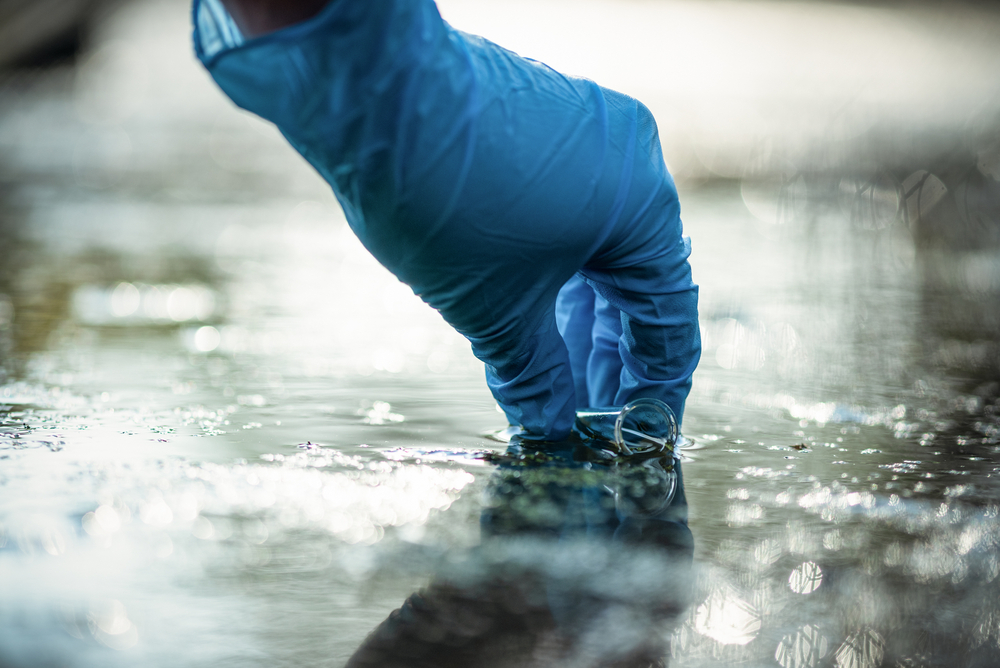
Surface and groundwater sampling at Richards Bay Minerals, Richards Bay
GASS has secured a three-year contract for undertaking surface and groundwater sampling at Richards Bay Minerals (RBM), located north of Richards Bay in KwaZulu-Natal, South Africa. The Richards Bay Minerals operation is, according to the company’s media material, “a world leader in heavy mineral sands extraction and refining and is South Africa’s largest mineral sands producer”. The area is geologically diverse; it is located on unconsolidated sands and clays. The materials are predominantly Aeolian deposits with some intertidal deposits, resulting in some of the highest dune cordons in South Africa. These dune cordons have been actively mined for their heavy mineral content for the past 25 years.
The RBM project involves our field operators visiting the site monthly to sample anything from 30 to 92 different water sample locations on the Zulti North lease area of RBM’s mining operation. When requested by the client, we also monitor the Zulti South lease area. We collect and deliver samples to a reputable laboratory according to a strict sampling protocol. Concerning borehole sampling: we use a 12v sampling pump with low flow capabilities. This pump is capable of pumping a head of 70 meters to collect the borehole water samples. Our field team uses a grab-sample wand for collecting surface water. All major surface water sources and strategically distributed monitoring boreholes are monitored throughout the lease area. During the sample run, we collect standard field parameters and submit a report to our client. This includes static water levels, sample depths, purge volumes and borehole depths. In addition the following recorded water quality parameters are included: pH, electrical conductivity, dissolved oxygen, total dissolved solids, temperature and oxygen reduction potential. Our operators also note general comments regarding the condition of the sample point e.g., the flow, condition of sample body, missing wellheads, damage, vandalism and the sample’s colour and smell. While sampling, we note any indication of potential contamination or significant changes in water quality. We will document any issues in monthly reports that are submitted to our client.
Owing to the challenging on-site conditions such as high dunes, adverse driving conditions, elevated temperatures and rainfall events, wild animals, reptiles and insects, coastal forests and wetlands, community involvement, we followed strict HSE policies and protocols on all visits.
Molenhoff Treatment System
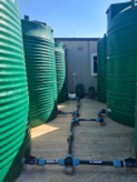
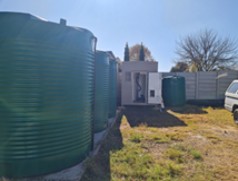
GASS was appointed by Anchor Down to assist with the site remediation of the Molenhoff Estate in Bredell, Gauteng, through the installation of a pump and treat system. The project involves constructing a concrete slab to support storage tanks, installing the treatment system, and laying 624 meters of piping to distribute treated water to 32 residences. Additionally, storage tanks were supplied at both the treatment unit and individual residences, with the system connected to transfer pumps at each home. All work was be carried out in compliance with the client’s Safety, Health, Environment, and Quality (SHEQ) requirements to ensure sustainable water management and improved water quality for the estate.
Installing shallow monitoring wells, Durban
GASS has been appointed to assist with installing 38 shallow monitoring wells to a maximum depth of 5m below ground level in the Durban area. The area is historically known for having serious contamination issues. The geology of the area consists of unconsolidated sands and clays with a large portion of the sediments belonging to the Berea formation, which is of Aeolian origin. Owing to its experiences in this area, GASS has approached the installation of the wells by adopting a combination of methods. Our field operators attempted hand auguring first; from experience, we know we can reach at least 4–6 meters below the surface using a drill and drive approach, providing the clay layers are not too thick. However, after several attempts, we opted for an alternative approach in which we reverted to jetting the wells into the subsurface utilizing water.
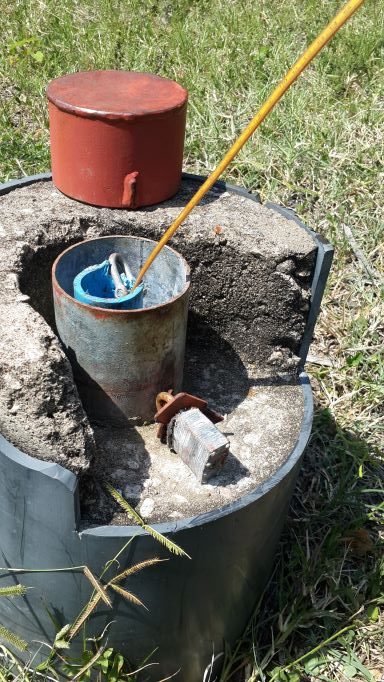
The project was successfully completed using the water jetting approach. Jetting is a labor-intensive operation that requires a dedicated team capable of collaborating to progress the jetting tool to the required depth. Fortunately, our experienced team are skilled and coordinated cohesively to deliver a jetted well. When installing a monitoring well in unconsolidated sands, it is critical to deliver a well with sufficient annulus to enable us to install the formation stabilizer correctly. The wells were developed and completed with 63 mm OD uPVC casing with 0.5 mm perforated casing because of the fine nature of the unconsolidated sands. Headworks were completed using galvanized standpipes to prevent rust. These protrude at least 1.2 m above ground and are fitted with lockable tamperproof well caps. The project remit is to establish an extensive network of monitoring wells throughout the complex to monitor the groundwater quality.
Our work was successful and completed on time and budget. Ultimately, groundwater sampling will be conducted quarterly from the wells; operators will then analyse the data to determine any potential areas of contamination. If contamination is detected, it will be reported, which could potentially lead to remediation on-site.